 Dr. Harsh Vardhan Puri
 Call Us :
Hospital Address :
Medanta - The Medicity
CH Baktawar Singh Rd, Medicity, Islampur Colony, Sector 38, Gurugram, Haryana 122001
CH Baktawar Singh Rd, Medicity, Islampur Colony, Sector 38, Gurugram, Haryana 122001
Dr. Harsh Vardhan Puri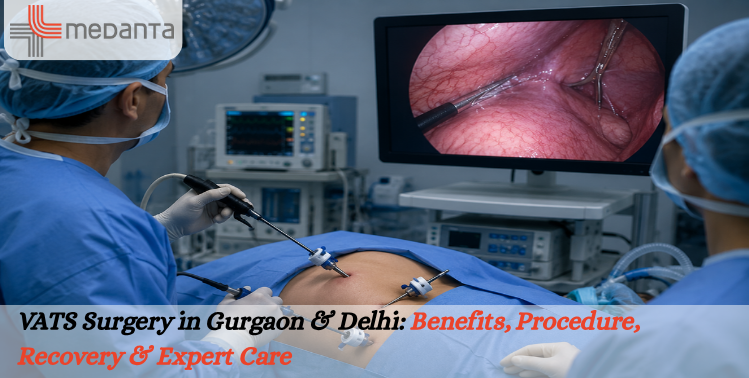
27 August, 2026
adminWhen a patient is diagnosed with a lung or chest condition that may require surgery, the thought of traditional open chest surgery can be concerning. Fortunately, advances in thoracic surgery have made minimally invasive procedures such as Video-Assisted Thoracic Surgery (VATS) possible for many suitable patients.
For people searching for VATS Surgery in Gurgaon or VATS Surgery in Delhi, understanding how the procedure works, when it may be recommended, its potential benefits, recovery process, and how to choose a thoracic surgeon can help in making an informed decision.
Dr. Harsh Vardhan Puri is a Senior Consultant Thoracic and Lung Transplant Surgeon at the Institute of Chest Surgery, Medanta – The Medicity, Gurugram, with expertise in minimally invasive thoracic surgery, including VATS and robotic thoracic procedures.
VATS stands for Video-Assisted Thoracic Surgery. It is a minimally invasive technique used by thoracic surgeons to diagnose and treat selected conditions affecting the lungs, pleura, chest wall, mediastinum, and other structures inside the chest.
Instead of making a large incision and spreading the ribs as in conventional open surgery, VATS uses small incisions through which a camera and specialized surgical instruments are introduced.
The surgeon views the inside of the chest on a monitor and performs the required procedure using these instruments. This approach can reduce the surgical trauma associated with a large open incision in appropriately selected patients.
VATS can be used for a variety of diagnostic and therapeutic thoracic procedures. Depending on the patient’s condition, a surgeon may consider VATS for:
The exact procedure depends on the diagnosis, imaging findings, overall health, and whether minimally invasive surgery is appropriate for the individual patient.
Gurgaon, officially known as Gurugram, has become an important healthcare destination for patients from Delhi NCR and surrounding regions.
Patients looking for VATS Surgery in Gurgaon may consider factors such as the surgeon’s thoracic surgery training, experience with minimally invasive procedures, hospital infrastructure, intensive care facilities, diagnostic support, and availability of multidisciplinary care.
Dr. Harsh Vardhan Puri performs VATS surgery at Medanta – The Medicity, Gurugram. His practice includes minimally invasive thoracic surgery for selected lung and chest conditions.
The hospital is located at:
Medanta – The Medicity
CH Baktawar Singh Road, Medicity, Islampur Colony, Sector 38, Gurugram, Haryana 122001
Patients searching for VATS Surgery in Delhi may also consider specialist thoracic surgical care available within the Delhi NCR region.
VATS is performed by specialized thoracic surgeons who are trained to operate inside the chest using a camera and small incisions. The technique may be used for procedures such as lung biopsies, lobectomies, treatment of selected lung lesions, and pneumothorax management.
For patients living in Delhi, travelling to Gurugram for a specialist consultation may be an option when advanced thoracic surgical services are required. The choice of hospital and surgeon should be based on the patient’s condition, surgical requirements, and the availability of appropriate postoperative care.
Traditional open thoracic surgery generally requires a larger incision and may involve spreading the ribs to access the chest.
VATS uses smaller incisions and a camera-assisted approach.
VATS may offer:
However, VATS is not automatically better or suitable for every patient. Some complex or advanced procedures may still require conventional open surgery. The surgical approach should be decided after a detailed evaluation by a thoracic surgeon.
Although the exact technique varies according to the procedure, VATS generally involves several steps.
Before surgery, the thoracic surgeon reviews the patient’s symptoms, medical history, imaging, laboratory investigations, and other relevant reports.
Depending on the condition, tests may include:
VATS is performed under anaesthesia so that the patient does not experience pain during the procedure.
The surgeon makes small incisions on the chest. A thoracoscope containing a camera is introduced through one of the incisions, while specialized instruments are inserted through other ports.
The surgeon views the inside of the chest on a monitor and performs the required operation.
Depending on the diagnosis, this may involve removing a lung nodule, part of the lung, draining an infection, taking a biopsy, removing diseased tissue, or performing another thoracic procedure.
After the procedure, the instruments are removed and the incisions are closed. A chest tube may be placed temporarily to help drain air or fluid and allow the lung to expand properly.
One of the major reasons VATS is considered for suitable patients is that it can avoid some of the trauma associated with a large open chest incision.
Potential benefits include:
VATS uses small incisions rather than a large thoracotomy incision.
Because VATS generally causes less disruption to the chest wall than open surgery, some patients experience less postoperative discomfort.
The smaller incisions can result in smaller visible scars.
Patients may be able to start moving around earlier after surgery depending on their condition and recovery.
Selected patients may be discharged sooner compared with traditional open surgery, although hospital stay depends on the type of operation and individual recovery.
Recovery varies from patient to patient, but minimally invasive surgery can allow some patients to return to normal activities sooner.
These potential benefits do not mean VATS is suitable for every case. The surgeon must determine whether the minimally invasive approach is medically appropriate.
VATS may be used for selected patients with lung cancer.
Depending on the location, size, stage, and characteristics of the tumor, a thoracic surgeon may consider minimally invasive surgery for procedures such as lung resection.
The treatment plan may also involve pulmonologists, medical oncologists, radiation oncologists, radiologists, pathologists, and other specialists.
Therefore, lung cancer surgery should be planned after complete staging and multidisciplinary evaluation.
A pneumothorax occurs when air enters the space between the lung and chest wall, which can cause the lung to partially or completely collapse.
Some patients with recurrent or persistent pneumothorax may require surgical treatment. VATS can be used in selected cases to identify and treat the underlying cause.
The exact procedure depends on the cause of the pneumothorax and the patient’s clinical condition.
Empyema is a serious condition in which infected fluid or pus collects around the lung.
In selected stages of empyema, VATS may be used to drain infected material, break internal collections, clean the pleural cavity, and help the lung expand.
In more advanced or complex cases, an open surgical approach may be necessary.
The appropriate approach depends on the stage and severity of the disease.
Proper preparation can help make the surgical process smoother.
Your surgeon may advise you to:
Do not stop or change prescribed medication without discussing it with your treating doctor.
After surgery, patients are monitored in the hospital while the medical team checks pain control, breathing, chest tube drainage, oxygen levels, and overall recovery.
Depending on the procedure, patients may experience:
Pain medication may be prescribed, and patients are generally encouraged to gradually increase activity according to their surgeon’s instructions.
Follow-up appointments are important to monitor healing and review pathology or other test results when applicable.
Recovery depends on the type of VATS procedure, the patient’s general health, the underlying disease, and whether any complications occur.
Some patients may return to light activities relatively quickly, while more extensive procedures require a longer recovery period.
Your thoracic surgeon will provide personalized instructions regarding:
There is no single recovery timeline that applies to every VATS procedure.
VATS is an established minimally invasive thoracic surgical technique, but like every surgical procedure, it carries potential risks.
Possible complications can include:
The risks depend on the patient’s medical condition and the complexity of the operation.
A thoracic surgeon should discuss the expected benefits, possible risks, alternatives, and recovery process before surgery.
When searching for VATS Surgery in Gurgaon or VATS Surgery in Delhi, consider more than just online rankings.
Important factors include:
Look for a surgeon with dedicated training and experience in thoracic surgery.
VATS requires specialized skills and familiarity with thoracic anatomy and minimally invasive surgical techniques.
A surgeon’s experience should be relevant to your diagnosis and the procedure being considered.
Complex thoracic surgery may require advanced imaging, intensive care, anaesthesia, pathology, pulmonology, oncology, and other support services.
The surgeon should explain the diagnosis, surgical options, expected recovery, and possible risks clearly.
Dr. Harsh Vardhan Puri is a Senior Consultant Thoracic and Lung Transplant Surgeon at the Institute of Chest Surgery, Medanta – The Medicity, Gurugram.
His practice includes VATS and robotic thoracic surgery. The clinic’s website states that he has extensive experience in minimally invasive thoracic surgery and performs VATS procedures at Medanta – The Medicity.
His areas of thoracic surgical care include conditions involving the lungs, pleura, mediastinum, chest wall, airway, and other thoracic structures.
For patients from Delhi NCR, Gurugram can provide access to specialized thoracic surgical care while remaining geographically accessible from Delhi.
VATS, or Video-Assisted Thoracic Surgery, is a minimally invasive technique that uses small chest incisions, a camera, and specialized instruments to diagnose or treat selected thoracic conditions.
VATS may offer benefits such as smaller incisions, less postoperative discomfort, smaller scars, and potentially faster recovery in suitable cases. However, open surgery may be necessary for some complex conditions.
VATS procedures are generally performed by thoracic surgeons with specialized training in minimally invasive chest surgery.
The duration depends on the specific procedure and complexity of the condition. Some procedures may take a few hours, while more complex operations can take longer.
Hospital stay varies depending on the procedure and individual recovery. Some patients may be discharged after a short stay, while others require longer monitoring.
VATS is performed under anaesthesia. Some discomfort around the incision sites can occur after surgery, but pain is generally managed with appropriate medication.
Yes, VATS can be considered for selected lung cancer operations depending on the tumor’s location, size, stage, and the patient’s overall condition.
No. The suitability of VATS depends on the patient’s diagnosis, disease stage, anatomy, previous surgeries, overall health, and the complexity of the planned procedure.
VATS Surgery in Gurgaon and VATS Surgery in Delhi provides a minimally invasive option for selected patients requiring thoracic procedures. By using small incisions and camera-assisted surgical techniques, VATS may help reduce surgical trauma and support recovery in appropriately selected cases.
However, the choice between VATS and open surgery should always be based on a detailed evaluation by an experienced thoracic surgeon.
For patients in Delhi NCR seeking specialized thoracic care, Dr. Harsh Vardhan Puri provides VATS and other minimally invasive thoracic surgical services at Medanta – The Medicity, Gurugram.
Dr. Harsh Vardhan Puri
Senior Consultant – Thoracic & Lung Transplant Surgeon
Institute of Chest Surgery, Medanta – The Medicity, Gurugram
Phone: +91 828-500-0787 / +91 982-100-9706
Email: [email protected]
Category : Thoracic Surgery , VATS Treatment