 Dr. Harsh Vardhan Puri
 Call Us :
Hospital Address :
Medanta - The Medicity
CH Baktawar Singh Rd, Medicity, Islampur Colony, Sector 38, Gurugram, Haryana 122001
CH Baktawar Singh Rd, Medicity, Islampur Colony, Sector 38, Gurugram, Haryana 122001
Dr. Harsh Vardhan Puri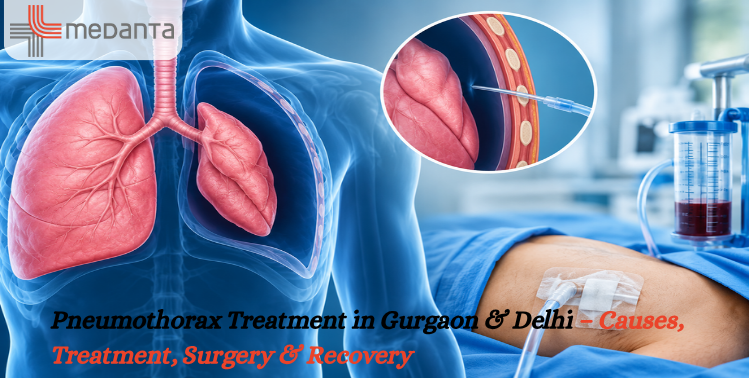
29 September, 2026
adminA sudden sharp pain in the chest or unexpected difficulty in breathing can sometimes be a sign of pneumothorax, commonly known as a collapsed lung. Although some small pneumothoraces may be managed with observation, other cases require urgent medical treatment, chest tube drainage, or surgery.
For patients searching for Pneumothorax Treatment in Gurgaon or Pneumothorax Treatment in Delhi, timely assessment by an experienced thoracic surgeon is important, especially when symptoms are severe, the pneumothorax is recurrent, or there is an ongoing air leak.
Dr. Harsh Vardhan Puri, Senior Consultant Thoracic & Lung Transplant Surgeon at the Institute of Chest Surgery, Medanta – The Medicity, Gurugram, specializes in thoracic surgery, including VATS surgery for pneumothorax. Medanta specifically lists his expertise in VATS (key-hole) surgery for pneumothorax.
Pneumothorax occurs when air enters the pleural space between the lung and chest wall. The accumulated air can put pressure on the lung and prevent it from expanding normally.
Depending on the amount of air and the underlying cause, the lung may partially or completely collapse.
Pneumothorax can occur due to:
The severity can vary considerably from one patient to another.
Common symptoms of pneumothorax may include:
A sudden onset of significant chest pain or breathing difficulty should not be ignored.
A large or tension pneumothorax can become a medical emergency.
Immediate medical attention is required when a patient develops:
Tension pneumothorax can place pressure on the lungs and cardiovascular system and requires urgent treatment.
Understanding the type of pneumothorax helps doctors determine the appropriate treatment.
This may occur without an obvious underlying lung disease and can sometimes be associated with rupture of small blebs in the lung.
This occurs in patients with an underlying lung condition. The management may be more complex because the patient already has compromised lung function.
A chest injury or accident can cause air to enter the pleural space.
This can occur as a complication of certain medical procedures involving the chest or lungs.
This is a serious form in which increasing pressure within the chest can compromise breathing and circulation. It requires immediate emergency treatment.
A thoracic specialist generally evaluates the patient’s symptoms, medical history, and physical examination findings before selecting appropriate investigations.
A chest X-ray is commonly used to identify a collapsed lung and assess the approximate size of the pneumothorax.
A CT scan can provide more detailed information about the lungs and may be useful in complicated, recurrent, or uncertain cases.
Depending on the patient’s condition, additional tests may be recommended to evaluate lung function or identify an underlying cause.
There is no single treatment suitable for every pneumothorax patient.
Treatment depends on factors such as:
Possible treatment approaches include observation, oxygen therapy, needle aspiration, chest tube drainage, and surgery.
Some small pneumothoraces with minimal symptoms may be managed conservatively under medical supervision.
The patient may require observation and follow-up imaging to confirm that the lung is re-expanding and the pneumothorax is resolving.
This decision should always be made by a qualified medical professional.
In selected cases, a needle or catheter can be used to remove air from the pleural space.
Removing the trapped air can allow the lung to expand again and may avoid the need for a chest tube in appropriate patients.
The suitability of aspiration depends on the patient’s condition and the characteristics of the pneumothorax.
A chest tube may be required when the pneumothorax is larger, symptoms are significant, or there is persistent air leakage.
The tube allows air to escape from the pleural space and helps the lung re-expand.
Patients are generally monitored with clinical assessment and imaging to determine whether the lung has adequately expanded.
Not every pneumothorax requires surgery.
A thoracic surgeon may consider surgery in selected situations such as:
The decision is individualized after reviewing imaging, medical history, previous episodes, and the patient’s overall condition.
Video-Assisted Thoracic Surgery (VATS) is a minimally invasive approach used for selected pneumothorax patients.
During VATS, the surgeon uses a camera and specialized instruments through small chest incisions to identify and treat the source of the air leak.
Depending on the patient’s condition, the procedure may involve treatment of blebs or bullae and an additional procedure such as pleurodesis to reduce the likelihood of recurrence.
Dr. Harsh Vardhan Puri’s professional profile specifically lists VATS key-hole surgery for pneumothorax among his areas of expertise.
Patients searching for Pneumothorax Treatment in Gurgaon should consider the availability of specialized thoracic surgical care along with appropriate emergency, diagnostic, anesthesia, and postoperative support.
Dr. Harsh Vardhan Puri provides thoracic surgical care at Medanta – The Medicity, Gurugram, and his practice includes management of pneumothorax and VATS thoracic surgery.
For patients with recurrent or complicated pneumothorax, evaluation by a dedicated thoracic surgeon can help determine whether conservative management, drainage, or definitive surgery is appropriate.
Patients searching for Pneumothorax Treatment in Delhi may require different treatment approaches depending on the size, cause, and severity of the pneumothorax.
For patients in Delhi NCR, specialized thoracic surgical care is also available in nearby Gurugram.
Dr. Harsh Vardhan Puri’s pneumothorax service specifically covers patients seeking care from Delhi and Gurgaon, with treatment provided at Medanta – The Medicity, Gurugram.
Patients from Delhi, Noida, Faridabad, Ghaziabad, and other NCR locations may therefore consider Gurugram when specialist thoracic surgical care is required.
One of the important concerns after a pneumothorax is the possibility of recurrence.
Recurrence may be associated with factors such as:
Patients with repeated episodes should undergo specialist evaluation.
In selected recurrent cases, VATS surgery with a procedure to reduce recurrence may be considered.
Yes. Surgery is not required for every patient.
Depending on the size and symptoms, treatment may include observation, oxygen therapy, needle aspiration, or chest tube drainage.
However, recurrent pneumothorax or persistent air leakage may require a more definitive surgical approach.
The appropriate treatment should always be decided after medical evaluation.
Recovery depends on the severity of the pneumothorax and the treatment required.
Patients treated conservatively may require follow-up imaging and gradual return to normal activities.
Patients undergoing chest tube drainage or surgery may require a longer recovery period and specific postoperative instructions.
Follow-up is important to ensure that the lung remains expanded and to monitor for recurrence.
The risk of another pneumothorax cannot always be completely eliminated, but certain measures may be recommended depending on the individual case.
These may include:
Patients should discuss travel, flying, diving, exercise, and other activities with their treating specialist before resuming them after pneumothorax.
A recurrent pneumothorax may require more than simply treating the immediate episode.
A thoracic surgeon can evaluate:
This helps determine whether definitive treatment may be appropriate.
Dr. Harsh Vardhan Puri is a Senior Consultant Thoracic & Lung Transplant Surgeon at the Institute of Chest Surgery, Medanta – The Medicity, Gurugram.
His areas of expertise include:
Medanta specifically lists his expertise in VATS key-hole surgery for pneumothorax, empyema, and lung cancer.
Pneumothorax is the presence of air in the pleural space around the lung, which can cause partial or complete lung collapse.
It can range from mild to life-threatening. Tension pneumothorax is an emergency and requires immediate medical treatment.
Some small pneumothoraces may resolve with observation and appropriate medical monitoring. The decision depends on the patient’s symptoms, size of the pneumothorax, and overall health.
Surgery may be considered for recurrent pneumothorax, persistent air leakage, failure of the lung to remain expanded, or selected cases where definitive treatment is appropriate.
Yes. VATS can be used in selected patients, particularly in recurrent or complicated cases. It is a minimally invasive thoracic surgical technique.
Yes, recurrence is possible. Patients with recurrent episodes should be evaluated by a thoracic specialist to discuss appropriate preventive treatment.
Dr. Harsh Vardhan Puri provides specialized thoracic surgical care, including VATS treatment for selected pneumothorax patients, at Medanta – The Medicity, Gurugram.
Yes. Gurugram is part of the Delhi NCR region, and patients from Delhi may seek specialized thoracic care in Gurugram depending on their medical needs.
Pneumothorax requires timely assessment because its severity can vary from a small, self-resolving condition to a medical emergency.
Treatment may include observation, oxygen therapy, needle aspiration, chest tube drainage, or surgery depending on the individual case.
For patients searching for Pneumothorax Treatment in Gurgaon or Pneumothorax Treatment in Delhi, consultation with an experienced thoracic surgeon can help determine the most appropriate treatment approach.
For recurrent or complicated pneumothorax, minimally invasive VATS surgery may be considered in appropriately selected patients.
Dr. Harsh Vardhan Puri, Senior Consultant Thoracic & Lung Transplant Surgeon at Medanta – The Medicity, Gurugram, provides specialized evaluation and surgical care for pneumothorax and other complex thoracic conditions.
Category : Pneumothorax