 Dr. Harsh Vardhan Puri
 Call Us :
Hospital Address :
Medanta - The Medicity
CH Baktawar Singh Rd, Medicity, Islampur Colony, Sector 38, Gurugram, Haryana 122001
CH Baktawar Singh Rd, Medicity, Islampur Colony, Sector 38, Gurugram, Haryana 122001
Dr. Harsh Vardhan Puri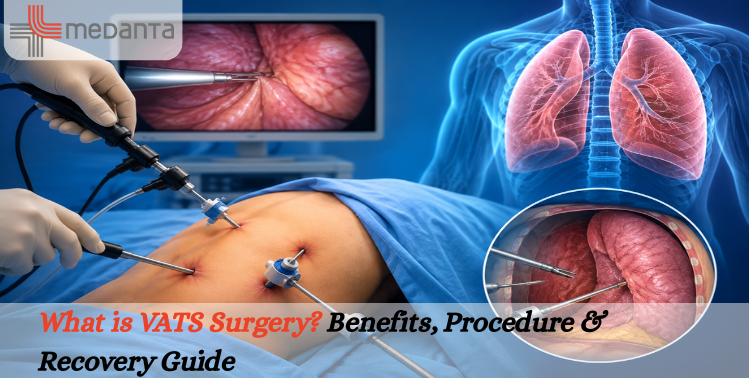
05 June, 2026
adminVideo-Assisted Thoracic Surgery (VATS) is a modern, minimally invasive surgical technique used to diagnose and treat conditions affecting the chest, lungs, esophagus, and other thoracic organs. Unlike traditional open chest surgery, VATS requires only a few small incisions, resulting in less pain, faster recovery, and improved patient outcomes.
With advancements in thoracic surgery, VATS has become one of the most preferred procedures for treating lung cancer, lung nodules, pleural diseases, and other chest conditions. Experienced thoracic surgeons such as Dr. Harsh Vardhan Puri use VATS to provide safer and more effective treatment options for patients.
Vats surgery is a minimally invasive procedure performed using a tiny camera called a thoracoscope and specialized surgical instruments. The camera provides a high-definition view of the chest cavity on a monitor, allowing the surgeon to perform complex procedures through small incisions.
VATS is commonly used to treat several thoracic conditions, including:
VATS is frequently used for the removal of early-stage lung tumors and cancerous lung tissue.
Suspicious lung nodules can be biopsied or removed through VATS for accurate diagnosis and treatment.
Excess fluid around the lungs can be drained and treated effectively using VATS.
VATS helps repair air leaks and prevent recurrent lung collapse.
Tumors located between the lungs can be removed with precision using minimally invasive techniques.
Certain esophageal conditions may also be treated through VATS-assisted procedures.
Traditional open surgery often requires a large incision, whereas VATS uses only small cuts, reducing surgical trauma.
Patients generally experience significantly less post-operative pain compared to conventional thoracic surgery.
Most patients return to normal activities sooner due to reduced tissue damage.
Smaller incisions reduce the risk of infection, bleeding, and other surgical complications.
Many patients are discharged within a few days after surgery.
Minimal scarring is another major advantage of VATS.
The procedure typically involves the following steps:
The patient is placed under general anesthesia.
The surgeon creates two to four small incisions in the chest wall.
A tiny camera is inserted through one incision, providing a magnified view of the chest cavity.
Specialized instruments are inserted through the remaining incisions to perform the required procedure.
The incisions are closed with sutures, and a chest drain may be placed temporarily.
The duration of surgery depends on the complexity of the condition being treated.
Recovery is generally quicker than traditional open chest surgery.
Most patients remain hospitalized for 2–5 days, depending on the procedure performed.
Mild discomfort is common but can usually be managed with prescribed medications.
Patients are encouraged to perform breathing exercises to improve lung function and prevent complications.
Light walking is recommended shortly after surgery, while strenuous activities should be avoided for several weeks.
Regular follow-up appointments help monitor healing and ensure optimal recovery.
You may be a suitable candidate for VATS if you have:
A thoracic surgeon will evaluate your medical history, imaging scans, and overall health before recommending the procedure.
| Feature | VATS Surgery | Open Surgery |
| Incision Size | Small | Large |
| Pain | Less | More |
| Recovery Time | Faster | Longer |
| Hospital Stay | Shorter | Longer |
| Scarring | Minimal | Significant |
| Risk of Complications | Lower | Higher |
Dr. Harsh Vardhan Puri is a highly experienced thoracic surgeon specializing. His expertise in treating lung cancer, lung diseases, chest tumors, and complex thoracic conditions has helped numerous patients achieve successful outcomes with faster recovery and improved quality of life.
Video-Assisted Thoracic Surgery (VATS) has revolutionized the treatment of chest and lung conditions by offering a safer, less painful, and faster alternative to traditional open surgery.
If you are experiencing symptoms of a thoracic condition or have been advised to undergo chest surgery, consult Dr. Harsh Vardhan Puri to determine whether VATS surgery is the right treatment option for you.
Category : Thoracic Surgery