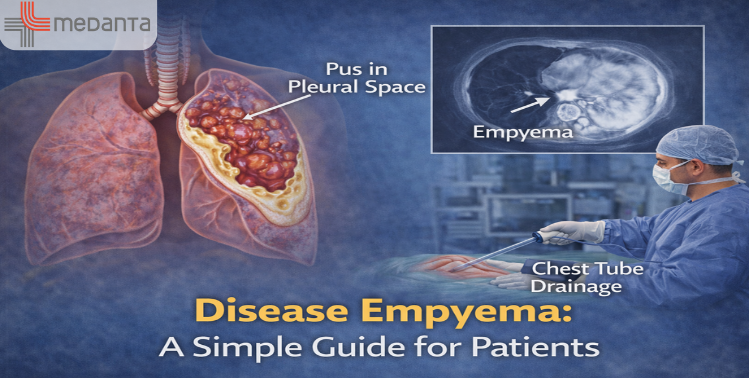
The condition of empyema affects the lungs by causing pus to build up in the pleural space between the lungs. The condition usually begins after someone suffers from pneumonia and does not receive treatment for their lung infection. The advanced stage of empyema creates problems for people to breathe, which can lead to death. The condition can be managed successfully through early diagnosis followed by suitable treatment methods.
The guide provides an explanation of empyema which includes its definition and causes and symptoms and diagnostic methods and treatment procedures and the process of healing.
What is Disease Empyema?
The medical condition of empyema occurs when an infection causes thick pus to develop around the lungs. The lungs normally expand and contract freely during the breathing process.
The condition of empyema:
- The lungs are the source of infection.
- The area surrounding the lungs is filled with pus.
- The lung is unable to fully expand.
- Breathing becomes challenging and painful.
Stages of Empyema
The development of empyema follows a series of three stages which begin with:
- Early Stage (Simple Empyema)
- Thin infected fluid
- It can be treated with antibiotics and drainage
- Middle Stage (Complicated Empyema)
- The fluid develops thickness.
- Pus gets trapped in pockets.
- Late Stage (Chronic Empyema)
- A thick layer forms around the lung
- The lung becomes trapped.
- Surgery is often required.
Common Causes of Empyema
Empyema typically occurs as a result of:
- Untreated or severe pneumonia – This dangerous lung infection grows worse when doctors do not provide treatment.
- Lung infections – When germs infect the lungs, they can result in fever, swelling and difficulty breathing.
- Tuberculosis – A chronic lung infection that gradually deteriorates lung tissue.
- Chest injury or trauma – A severe blow or mishap that damages the lungs and chest.
- Infection after chest surgery – bacteria that enter the chest region following surgery.
- Weak immune system – The body lacks the strength necessary to effectively combat infections.
- Long-term lung disease – Breathing becomes weaker due to lung issues that persist for many years.
Symptoms of Empyema
You should see a doctor if you have:
- Fever and chills: An infection-related high body temperature accompanied by shivering.
- Chest pain: The presence of chest pain or discomfort appears during breathing or coughing actions.
- Breathing difficulties: Inability to breathe or feeling out of breath.
- Prolonged cough: A cough that lasts for several weeks without going away.
- Weakness or fatigue: A person experiences persistent low energy levels which affect their overall vitality.
- Weight loss: The body experiences weight loss which occurs without any effort to control weight through dieting.
- Poor appetite: The condition leads to a complete loss of hunger together with a strong disinterest in eating.
The first signs of a medical condition should not be ignored because immediate treatment stops the development of serious health issues.
How is Empyema Diagnosed?
Physicians use basic tests like:
- Chest X-ray: A straightforward test that looks at the chest and lungs to detect fluid or infection.
- CT scan: An in-depth image that clearly shows infection and pus inside the chest.
- Ultrasound: A test that uses sound waves to find fluid surrounding the lungs.
- Blood tests: These are examinations of the body’s general health and infections.
- The pus testing method: Testing the fluid from the area surrounding the lungs to identify the source of the infection.
The medical professionals use these tests to develop treatment plans while confirming the existence of empyema.
Treatment of Disease Empyema
The progression of empyema together with the patient’s overall health determines the treatment approach.
-
Antibiotics
- Used in early stages
- The medicine helps to control the spread of infections.
-
Chest Tube Drainage
- The procedure begins with tube insertion to extract pus from the body.
- The procedure functions as a medical treatment for lung expansion.
-
Medicines to Break Thick Pus
- The treatment gets administered through the tube.
- The method enables the removal of blocked pus from the body.
-
Surgery
Surgical intervention becomes necessary when empyema reaches its advanced stage.
- VATS (keyhole surgery) – surgery with small cuts
- Open surgery – for severe cases
The surgical procedure removes pus from the body and restores normal lung function which enables the patient to breathe effectively.
Recovery After Empyema Treatment
The process of recovery from empyema treatment depends on three main factors which include:
- Stage of empyema – How early or advanced the pus infection around the lungs is.
- Treatment method – Medicines, tube drainage or surgery.
- Overall health of the patient – The body’s ability to heal and recover.
Most patients need:
- Follow-up visits
- Breathing exercises
- Healthy food
- Rest and family support
The speed of recovery improves when patients receive treatment during the initial stages of their condition.
Can Empyema Be Prevented?
The prevention of empyema becomes possible through:
- Treating pneumonia early
- Completing all antibiotic treatment
- People should stop smoking.
- Regular health checkups should become part of your health routine.
- People should seek medical assistance when experiencing chest infections.
About Dr. Harsh Vardhan Puri
Dr. Harsh Vardhan Puri is a renowned and trustworthy thoracic surgeon who has extensive experience in treating empyema and other chest-related medical conditions. He specializes in advanced chest procedures that utilize VATS (keyhole surgery) to help patients recover faster with fewer surgical problems.
Dr. Puri conducts complete medical evaluations on patients to explain their treatment plan using basic language so that both patients and their relatives can understand every part of the process. He possesses both compassion and direct communication skills which establish him as the preferred physician for treating chest infections and empyema while he maintains a strong commitment to patient safety.
FAQs – Disease Empyema
- Is empyema a serious disease?
Empyema is a serious medical condition that requires immediate treatment.
- Can empyema heal on its own?
The condition needs medical treatment for its healing.
- Does empyema always need surgery?
Antibiotic treatment and drainage will resolve early empyema cases without surgical intervention.
- How long does recovery take?
The time needed for recovery depends on the seriousness of the condition which may last several weeks.
- Can empyema come back?
When medical treatment is done correctly the chance of returning symptoms is very low.
 Dr. Harsh Vardhan Puri
 Call Us :