 Dr. Harsh Vardhan Puri
 Call Us :
Hospital Address :
Medanta - The Medicity
CH Baktawar Singh Rd, Medicity, Islampur Colony, Sector 38, Gurugram, Haryana 122001
CH Baktawar Singh Rd, Medicity, Islampur Colony, Sector 38, Gurugram, Haryana 122001
Dr. Harsh Vardhan Puri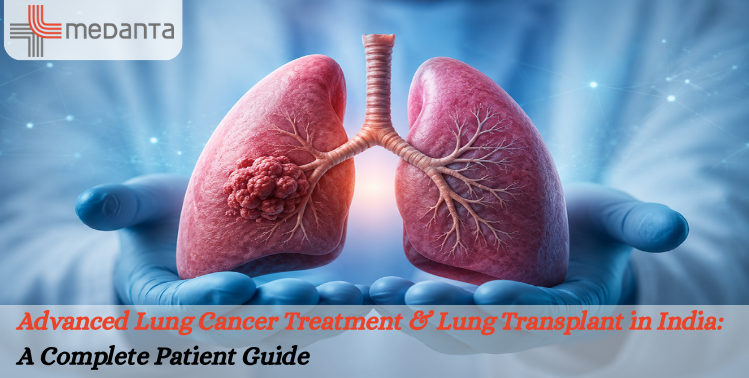
24 August, 2026
adminLung diseases can range from conditions that respond well to medication to serious illnesses requiring specialized surgery or transplantation. When lung cancer is diagnosed or lung function becomes severely compromised, timely evaluation by an experienced thoracic and lung transplant specialist is important.
Patients searching for Top Lung Cancer Treatment in Gurgaon, Lung Cancer Treatment in Gurgaon, or the Best Lung Transplant in India often want to understand their treatment options, when surgery may be required, and where advanced thoracic care is available.
Dr. Harsh Vardhan Puri is a Senior Consultant Thoracic and Lung Transplant Surgeon at the Institute of Chest Surgery, Medanta – The Medicity, Gurugram. His areas of expertise include lung cancer surgery, minimally invasive thoracic surgery, robotic surgery, and lung transplantation.
Lung cancer occurs when abnormal cells in the lung begin growing uncontrollably and can form a tumor. These abnormal cells may invade nearby tissues or spread to other parts of the body.
The two major categories are:
NSCLC includes several subtypes, such as adenocarcinoma and squamous cell carcinoma. SCLC is generally more aggressive and may require a different treatment strategy.
A suspicious lung lesion does not automatically mean cancer. Imaging findings often need to be evaluated with appropriate diagnostic tests, and a biopsy may be required to confirm the diagnosis.
Lung cancer can sometimes develop without obvious symptoms during its early stages. When symptoms occur, they may include:
These symptoms can also occur with many other conditions. Anyone experiencing persistent or concerning symptoms should seek medical evaluation rather than assuming the cause.
An accurate diagnosis is essential before treatment is planned.
Depending on the patient’s symptoms and imaging findings, evaluation may include:
The diagnosis and stage of the disease help the medical team determine whether surgery, systemic therapy, radiation therapy, or a combination of treatments may be appropriate.
Lung cancer treatment depends significantly on the stage of the disease.
In general, doctors evaluate:
Staging helps the multidisciplinary team develop an individualized treatment plan.
There is no single treatment that is appropriate for every lung cancer patient. Treatment may involve one or more approaches.
Surgery may be recommended for selected patients, particularly when the cancer is localized and can be safely removed.
Depending on the location and extent of disease, procedures may include removal of:
The surgical approach may be conventional or minimally invasive, depending on the patient’s condition.
Video-Assisted Thoracic Surgery (VATS) is a minimally invasive technique used for selected thoracic procedures.
It involves small chest incisions, a camera, and specialized instruments. VATS may be considered for selected lung cancer operations and other chest conditions.
Potential advantages in suitable patients may include smaller incisions, less chest wall disruption, and potentially faster recovery compared with some traditional open procedures.
Robotic thoracic surgery is another minimally invasive approach that may be considered for selected patients.
A robotic surgical system allows the surgeon to control specialized instruments while viewing the operative field through a high-resolution camera system.
Whether robotic surgery is appropriate depends on factors such as tumor location, disease stage, anatomy, previous treatment, and overall health.
Chemotherapy uses medicines designed to destroy or control cancer cells. It may be used before surgery, after surgery, or as part of treatment for advanced disease depending on the patient’s diagnosis.
Radiation therapy uses high-energy radiation to target cancer cells.
It may be used in different stages of lung cancer, including situations where surgery is not appropriate or when radiation is recommended as part of combined treatment.
Some lung cancers contain specific molecular characteristics that can influence treatment selection.
Targeted therapies may be considered when a tumor has an actionable genetic alteration. Immunotherapy may also be appropriate for selected patients depending on tumor characteristics and clinical factors.
These treatments should be selected by an oncology team after appropriate testing.
When searching for Top Lung Cancer Treatment in Gurgaon, patients should focus on the quality and completeness of care rather than relying only on online rankings.
Important factors include:
Lung cancer surgery requires specialized knowledge of the lungs, airways, blood vessels, lymph nodes, and surrounding structures.
Accurate imaging, biopsy, pathology, staging, and pulmonary evaluation are essential for treatment planning.
For suitable patients, VATS or robotic thoracic surgery may offer a minimally invasive alternative to traditional open procedures.
Lung cancer treatment may involve:
A coordinated team can help develop a treatment strategy based on the patient’s individual disease.
Treatment does not end when surgery or another therapy is completed. Regular follow-up is important for monitoring recovery, reviewing pathology, detecting recurrence when possible, and managing long-term health.
Lung Cancer Treatment in Gurgaon can involve a combination of advanced diagnostics, surgery, systemic treatment, radiation, and follow-up care depending on the patient’s diagnosis.
Dr. Harsh Vardhan Puri provides thoracic surgical care at Medanta – The Medicity, Gurugram. His website lists lung cancer surgery, VATS, robotic thoracic surgery, and other complex thoracic procedures among his areas of expertise.
For patients from Delhi NCR and surrounding regions, Gurugram can provide access to specialized thoracic and multidisciplinary cancer care.
A lung transplant is different from lung cancer surgery.
Lung transplantation is generally considered for carefully selected patients with severe, advanced, or end-stage lung disease when available medical treatments are no longer sufficient.
Conditions that may potentially lead to consideration for lung transplantation include:
The decision requires a detailed transplant evaluation. Not every patient with severe lung disease will be eligible for transplantation.
Patients searching for the Best Lung Transplant in India should understand that choosing a transplant center involves much more than choosing a surgeon.
Important considerations include:
Lung transplantation is a complex treatment requiring coordinated care before, during, and after surgery.
Depending on the patient’s condition, transplant surgery may involve:
One diseased lung is replaced with a donor lung.
Both lungs are replaced with donor lungs.
In highly selected cases involving severe disease of both the heart and lungs, a combined heart-lung transplant may be considered.
In selected circumstances, lung tissue from living donors may be used for transplantation. This is a highly specialized procedure with specific eligibility requirements and risks to both donor and recipient.
A lung transplant involves several stages.
First, the patient undergoes an extensive assessment to determine whether transplantation is appropriate.
If the patient qualifies, the transplant team considers factors such as:
When suitable donor lungs become available, the patient is prepared for surgery under general anaesthesia.
The diseased lung may be removed and replaced with a donor lung. The donor lung is then connected to the patient’s airway and blood vessels.
After surgery, the patient is closely monitored in an intensive care setting.
Recovery varies significantly between patients and depends on the complexity of the transplant and the individual’s overall condition.
A lung transplant can provide an opportunity for improved breathing and quality of life for appropriately selected patients, but it is not the end of medical care.
Recipients require lifelong follow-up.
This may include:
Immunosuppressive medicines are important because the immune system can recognize the transplanted lung as foreign tissue and attempt to reject it.
Lung cancer and lung transplantation are separate areas of thoracic care, and transplantation is not a routine treatment for lung cancer.
Whether a patient with a history of cancer can ever be considered for transplantation depends on highly specific clinical factors, including cancer type, stage, recurrence risk, previous treatment, and transplant eligibility criteria.
Such decisions require evaluation by a specialized transplant team.
Thoracic surgery involves complex anatomy and procedures involving the lungs, airways, chest wall, pleura, mediastinum, and related structures.
When a patient requires surgery or transplant evaluation, specialized training and experience can be important.
Dr. Harsh Vardhan Puri is a Senior Consultant Thoracic and Lung Transplant Surgeon at the Institute of Chest Surgery, Medanta – The Medicity, Gurugram. His professional background includes DNB in General Surgery, DNB in Thoracic Surgery, and lung transplant training at Toronto General Hospital, Canada.
His practice includes lung cancer surgery, VATS, robotic thoracic surgery, complex thoracic procedures, and lung transplantation.
Patients from Delhi, Noida, Faridabad, Ghaziabad, and other parts of the NCR may travel to Gurugram for specialized medical care.
For patients considering Lung Cancer Treatment in Gurgaon, access to thoracic surgery, oncology, advanced imaging, intensive care, pathology, pulmonology, and other specialties can be important.
Medanta – The Medicity is located in Sector 38, Gurugram, and Dr. Harsh Vardhan Puri practices there as part of the Institute of Chest Surgery.
Consider consulting a thoracic specialist if you have:
Early specialist evaluation can help clarify the diagnosis and identify appropriate treatment options.
Before making a treatment decision, patients may ask:
Understanding the answers can help patients and families participate more confidently in treatment decisions.
There is no single best treatment for every patient. Treatment depends on cancer type, stage, tumor characteristics, overall health, and other clinical factors. Surgery, chemotherapy, radiation, targeted therapy, immunotherapy, or combinations may be used.
Some lung cancers can be treated with curative intent, particularly when detected at an early and treatable stage. Outcomes vary according to cancer type, stage, biology, and response to treatment.
Yes. VATS can be used for selected lung cancer operations and other thoracic procedures. The suitability of VATS depends on the patient’s condition and the planned operation.
Lung transplantation is generally considered for carefully selected patients with severe or end-stage lung disease when other treatments are no longer sufficient.
No. Eligibility depends on the underlying disease, overall health, transplant criteria, and detailed assessment by a specialized transplant team.
Dr. Harsh Vardhan Puri provides thoracic and lung transplant surgical care at Medanta – The Medicity, Gurugram. His clinical practice includes lung cancer surgery, minimally invasive thoracic surgery, and lung transplantation.
Choosing appropriate care for a serious lung condition requires accurate diagnosis, specialist evaluation, and individualized treatment planning.
For patients looking for Top Lung Cancer Treatment in Gurgaon, treatment may involve surgery, VATS, robotic thoracic surgery, chemotherapy, radiation, targeted therapy, immunotherapy, or a combination depending on the disease.
For patients searching for Lung Cancer Treatment in Gurgaon, access to experienced thoracic surgeons and multidisciplinary medical support can be an important part of the treatment journey.
For patients with severe end-stage lung disease, the Best Lung Transplant in India should be determined by the quality and experience of the complete transplant program, not simply by an online ranking.
Dr. Harsh Vardhan Puri provides specialized thoracic and lung transplant care at Medanta – The Medicity, Gurugram, with expertise spanning lung cancer surgery, minimally invasive thoracic procedures, robotic surgery, and lung transplantation.
Dr. Harsh Vardhan Puri
Senior Consultant – Thoracic & Lung Transplant Surgeon
Institute of Chest Surgery, Medanta – The Medicity, Gurugram
Phone: +91 828-500-0787 / +91 982-100-9706
Email: [email protected]
Category : Lung Cancer , Lung Cancer Treatment